System logic
The product as a system, not a flat catalogue.
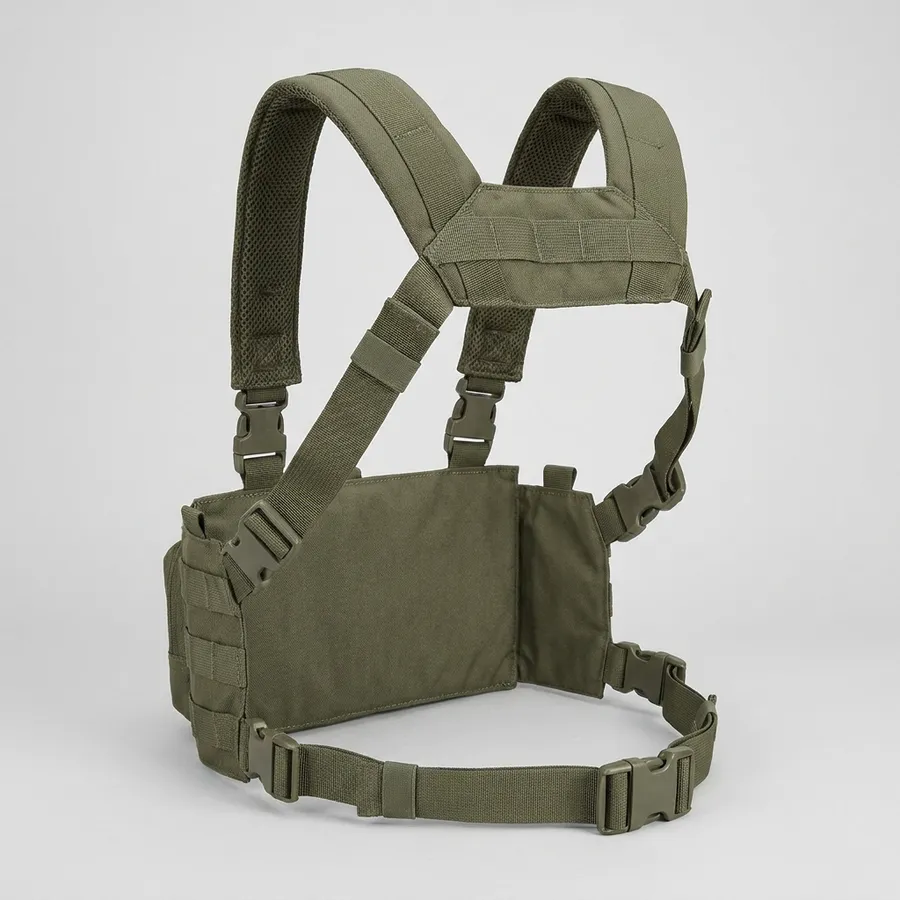
Technical products fail when the page behaves like a flat catalogue — a few images, a short paragraph, and a buyer left to fill the gaps. RIDGELINE INDEX reframes the product as a system: inspectable, configurable, and built to be understood before purchase. Specialist customers should not have to guess at fit, layout or materials, so product detail becomes a structured interface where swatches, named components, use cases, specs and inspection states work as one. The 3D rig is the most visible part of that, but the logic underneath it carries across every product in the line.
Interaction breakdown
What the interactive model demonstrates.
- 01 3D inspection Rotate the rig and read it from front, side and rear under controlled camera limits, so every angle stays composed and nothing turns into a free-look novelty.
- 02 Swatch logic Selecting a colourway re-materials the rig in the scene itself — Ranger Green, Coyote, Field Tan, Charcoal or Dry Earth on the actual geometry, not a swapped flat thumbnail.
- 03 Component education Select any part — Split Harness, Front Cell, Sidewing GP, Signal Pouch, Map Cell or Index Insert — and it names itself and explains what it is for, so the rig teaches its own layout.
- 04 Preset configuration Loadout presets reconfigure the active components and the build summary in one step, stepping from a slick carry to an extended build without rebuilding by hand.
- 05 Build summary A live, readable record of the current configuration — colourway, preset and active components — that stays accurate as you change the rig and reads as plain text.
- 06 Mobile fallback Where WebGL or screen size will not carry the 3D scene, the same product detail drops back to a usable, readable layout rather than a broken canvas.
Design decisions
The rules the interface follows.
- Product as a system The rig is modelled as named component groups rather than a single mesh, so the interface can teach the product — what each part is, where it sits, how it combines — instead of merely displaying it.
- Inspect before cart Every ambiguity a technical buyer would carry into the decision — fit, layout, materials, configuration — is made answerable before any purchase step, so the rig is understood before it is chosen.
- Restraint over spectacle No staged scenes, no heavy post-processing, no theatrics. The 3D earns its place as a tool for clarity; if an effect does not help the buyer understand the product, it does not belong here.
- Readable without 3D Specs, components, swatches and the build summary all stand on their own as plain text. The model is an enhancement layered on top of a complete page, never a dependency the content relies on.
See it on the product.
Inspect Field Rig 01